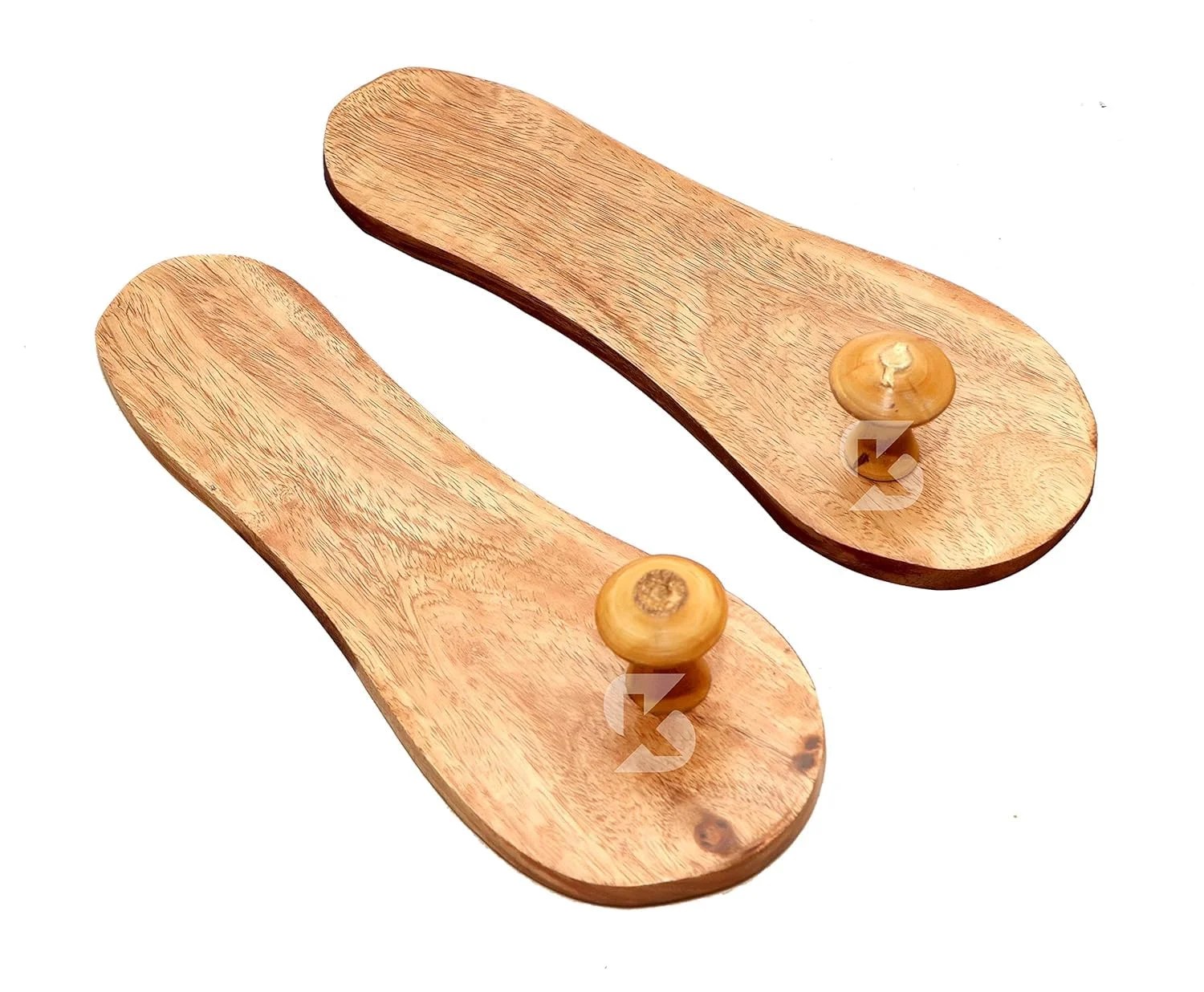
84 / 100 Powered by Rank Math SEO SEO Score Handicraft Wooden Sleeper Slippers Khadau Foot Feet Slippers chappal/Khadau Sleepers About this itemThank you for reading this post, don't forget to subscribe! Handicraft Wooden Sleeper Slippers Khadau Foot Feet Slippers chappal/Khadau Sleepers Related Product Of Indian SWan By Pratyaman Group Wooden Sleeper Slippers Khadau Foot Feet Slippers chappal Khadau Sleepers Brown SIZE :- 10 * 4 INCHES, size of fully grown man’s foot Its our glory to provide you with this beautiful design which you will not find easily. Bringing you the prestige of Indian Saints, So the product will be very finely crafted and with an excellent Finishing. Acupressure tools for blood circulation or complete relief from pain Wooden Chappal (Khadaun / Paduka): The Footwear of Tradition and Spirituality Visit Our All India Pin Code Search Tool By Pratyaman Group The wooden chappal, traditionally known as Khadaun or Paduka, is one of the oldest forms of footwear in Indian culture. It holds not only practical value but also deep religious and cultural significance. Made entirely from wood, the Khadaun is often associated with simplicity, purity, discipline, and devotion. Historical Background In ancient India, the Paduka was worn by sages, saints, and scholars. It’s often seen in scriptures and mythological stories — for example: Lord Rama’s wooden Paduka was kept on the throne by Bharat as a symbol of his authority during Rama’s exile. Great saints like Sant Kabir, Tulsidas, and Swami Vivekananda are often depicted wearing or keeping wooden slippers during meditation. The wooden chappal thus came to represent renunciation (tyaag), spiritual discipline, and connection to dharma. Description and Design A wooden chappal is usually made from a single piece of hardwood such as Teak (Sagwan), Neem, Sheesham, or Kadamba. Typical features: Material: Pure wood (sometimes polished with oil or varnish) Design: Flat sole with a small wooden peg between the first two toes (no straps or stitching) Length: Around 9–11 inches, depending on foot size Weight: Slightly heavier than modern footwear Finish: Smooth surface, often handmade and carved It is traditionally handcrafted by rural artisans who pass this skill through generations. Religious and Cultural Significance The Paduka is not just footwear — it is a symbol of holiness and humility. Spiritual Purity:Saints and monks wear it to avoid direct contact with the ground, keeping the body’s spiritual energy (prana) pure and insulated. Symbol of Reverence:Devotees often worship the Paduka of saints and gurus as a sign of respect. In many temples, Guru Paduka Pooja is performed to honor divine teachers. Sign of Simplicity:Wooden footwear reflects detachment from luxury — a reminder to live a simple and spiritual life. Used in Rituals:Wooden chappals are often used during poojas, havans, and Upanayana (Janeu Sanskar) rituals. The person performing the ceremony sometimes sits wearing Khadaun, symbolizing purity and tradition. Practical Benefits Though traditional, wooden chappals have some real health and practical advantages too: Eco-friendly: 100% natural and biodegradable. Improves posture: The elevated design promotes balanced walking and strengthens the foot arch. Non-conductive: Insulates from ground energy, useful during meditation or rituals. Durable: Lasts for years if maintained properly. Natural cooling: Keeps feet cool and dry, especially in humid climates. Disadvantages Despite their cultural importance, wooden chappals are less used today because: They are hard and uncomfortable for long walks. Can cause slipping on smooth surfaces. Require practice to walk comfortably. Limited flexibility compared to modern footwear. However, many people still wear them for spiritual or ritual purposes, not for daily use. Modern Adaptations Today, artisans and designers have modernized the wooden chappal: Decorative Khadaun with carvings and brass inlays used in temples. Designer Padukas used as gifts or souvenirs. Yoga and meditation footwear inspired by the old wooden sole concept. Eco-friendly sandals made using bamboo or cork wood inspired by ancient design. Symbolism in Hinduism In Hindu belief, the Paduka is more than footwear — it is a sacred symbol of humility and divine guidance. The Guru Paduka Stotram praises the sandals of the spiritual master as the path to liberation. For devotees, touching or worshipping the wooden Paduka represents bowing to knowledge, wisdom, and righteousness. Conclusion The wooden chappal (Khadaun / Paduka) stands as a timeless reminder of India’s spiritual heritage. It reflects the simplicity, purity, and discipline that ancient sages lived by. Even in the modern age of leather and synthetic shoes, the humble wooden chappal remains a symbol of devotion and traditional pride. It is not just footwear — it is a pathway to humility, spirituality, and connection with dharma. Visit Our Cricket Blog Post For Match Analysis & Report Post Views: 500 Related Discover more from Indian Swan Subscribe to get the latest posts sent to your email. Type your email… Subscribe