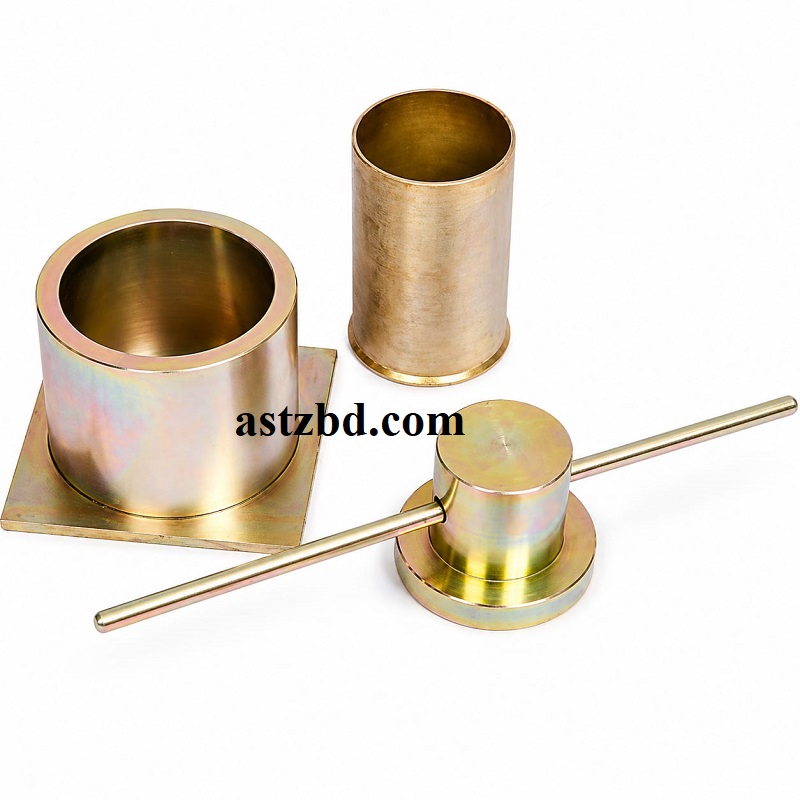
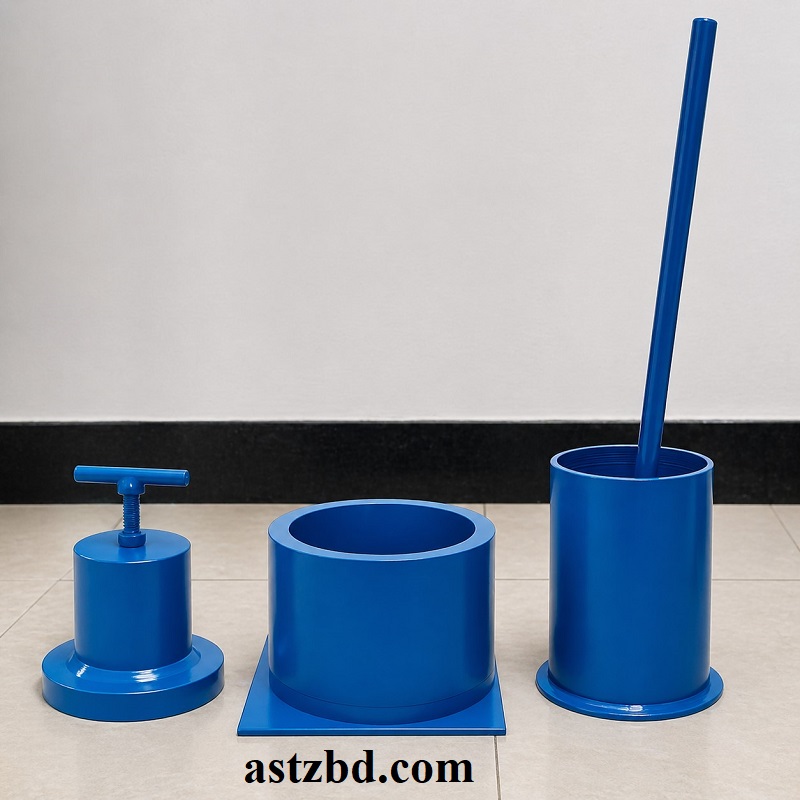
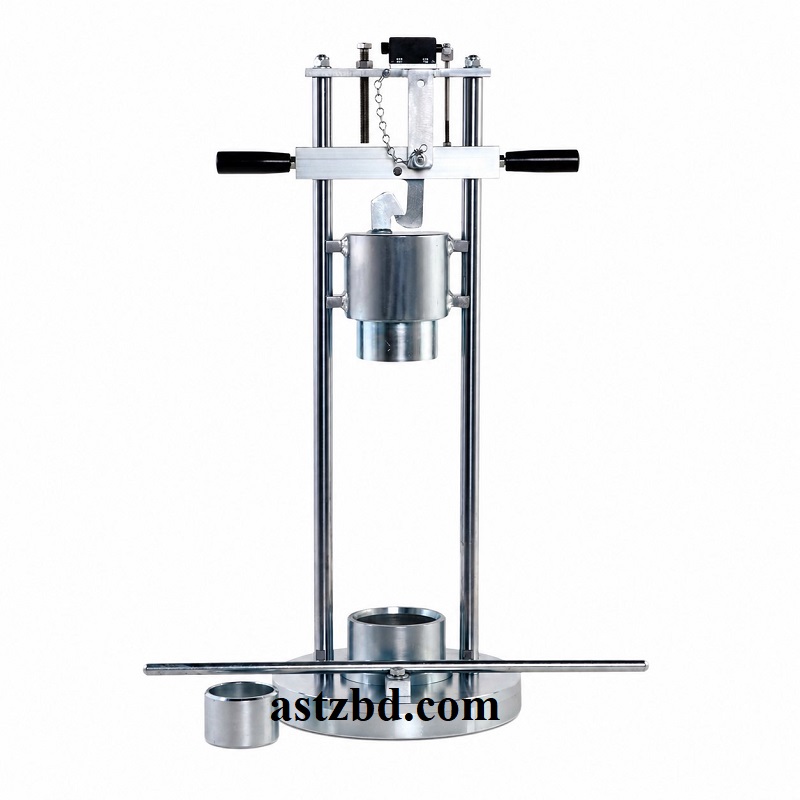
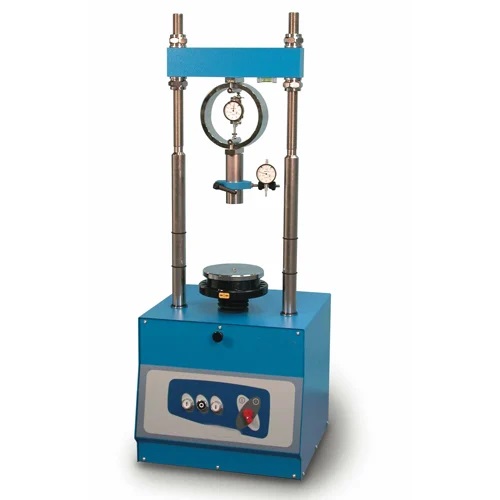
Description Introduction Aggregate Crushing Value Tester Construction projects demand high-quality aggregates that withstand heavy traffic loads, roller compaction, and long-term stress. The Aggregate Crushing Value Tester provides engineers and quality-control professionals with a standardised, reliable method to evaluate the crushing strength of coarse aggregates before they enter road construction, pavement design, or structural concrete work. The Aggregate Crushing Value Tester delivers a numerical index — the ACV percentage — that directly indicates how well an aggregate sample resists compressive force. A lower ACV percentage signals a stronger aggregate and predicts longer pavement service life. Bangladesh’s rapidly expanding infrastructure sector makes this instrument an essential tool for government testing labs, BUET laboratories, private construction firms, and material-testing facilities throughout the country. ASTZ Bangladesh supplies this precision apparatus with full compliance to IS 2386 Part IV:1963 and BS 812-110 standards, ensuring every test result meets national and international quality benchmarks. Specifications Aggregate Crushing Value Tester Parameter Specification Steel Cylinder Diameter 150 mm (15 cm) Plunger Diameter 148 mm (14.8 cm) Cylindrical Measure Diameter 115 mm (11.5 cm) Cylindrical Measure Height 180 mm (18 cm) Tamping Rod Diameter 16 mm Tamping Rod Length 450–600 mm (45–60 cm) Applied Test Load 400 kN (40 tonnes) Load Application Duration 10 minutes (uniform rate) Aggregate Sample Size Passing 12.5 mm IS sieve, retained on 10 mm IS sieve Sieve Sizes Required 12.5 mm, 10 mm, 2.36 mm IS Sieves Sample Conditioning Temp. 100–110°C for 4 hours (surface-dry condition) Balance Capacity Required 3–5 kg, accurate to 1 gram ACV Formula ACV (%) = (W2 × 100) / (W1 − W) Acceptable ACV Limit (Surface) ≤ 30% (surface courses) Acceptable ACV Limit (Base) ≤ 45% (base courses) Standard Compliance IS 2386 Part IV:1963, BS 812-110, AS 1141.21 Finish Powder-coated / Galvanised steel Material High-grade steel, heat-treated and ground Complete Specifications Apparatus Components Steel Cylinder: 150 mm internal diameter, open-ended, with base plate Plunger: 148 mm diameter hardened-steel piston with lifting rod and cross-hole Base Plate: Square, heavy-duty steel plate for stable cylinder mounting Cylindrical Measure: 115 mm diameter × 180 mm height metal measure Tamping Rod: 16 mm diameter, 450–600 mm length, rounded end, straight circular cross-section Test Parameters Aggregate Grade: Passing 12.5 mm IS sieve, retained on 10 mm IS sieve Sample Conditioning: Heat at 100–110°C for 4 hours; cool to room temperature Sample Depth in Cylinder After Tamping: 100 mm (three equal layers, 25 strokes each) Applied Load: 400 kN total, reached uniformly over 10 minutes Post-Test Sieve: 2.36 mm IS sieve Calculation W = Weight of empty cylinder base plate W1 = Weight of cylinder base plate surface-dry aggregate W2 = Weight of fraction passing 2.36 mm sieve after crushing ACV (%) = (W2 × 100) / (W1 − W); report as mean of two tests to nearest whole number Standard References IS 2386 Part IV:1963 – Methods of Test for Aggregates for Concrete (Mechanical Properties) BS 812-110 – Testing Aggregates: Methods for Determination of Aggregate Crushing Value (ACV) AS 1141.21 – Methods of Sampling and Testing Aggregates Key Features 150 mm diameter open-ended steel cylinder with precision-machined interior walls for consistent sample confinement 148 mm diameter hardened-steel plunger that transfers load uniformly across the aggregate surface without jamming Robust square base plate that anchors the cylinder securely during the 400 kN compression cycle 115 mm diameter × 180 mm height cylindrical measure for accurate sample-volume preparation 16 mm diameter metal tamping rod (45–60 cm long, rounded end) for controlled layer-by-layer compaction Powder-coated and galvanised finish on all components for corrosion resistance and long service life Full compliance with IS 2386 Part IV:1963, BS 812-110, and AS 1141.21 test standards Compatible with any 400 kN compression testing machine available in Bangladeshi labs Heat-treated and ground before assembly for dimensional accuracy and repeatable results Complete set supplied together — cylinder, plunger, base plate, cylindrical measure, and tamping rod Applications Road and highway pavement construction quality control in Bangladesh Coarse aggregate strength assessment for concrete mix design Bridge approach slab and structural concrete aggregate evaluation Airport runway subbase and surface course aggregate testing Quality inspection of stone chips, crushed stone, and gravel for construction Railway ballast material assessment and acceptance testing Pre-qualification of aggregate suppliers for government infrastructure contracts Research and development in civil-engineering materials laboratories Teaching demonstrations in BUET and polytechnic institute laboratories Quarry and aggregate production plant quality-assurance testing Who Uses This Civil engineers and site quality-control managers on road and bridge projects Government testing laboratories under LGED, RHD, and BRTC in Bangladesh Private construction companies and pavement contractors Aggregate quarries and stone-chip producers seeking product certification University and polytechnic institute laboratories – BUET, KUET, RUET, CUET Soil and material testing service companies providing third-party inspection Ready-mix concrete plant quality-assurance teams Research institutions studying pavement materials and durability Project consultants verifying aggregate compliance before construction begins International contractors and joint ventures working on Bangladesh infrastructure projects Frequently Asked Questions (FAQ) Q: What does the Aggregate Crushing Value Tester measure? A: The Aggregate Crushing Value Tester measures the resistance of coarse aggregates to crushing under a gradually applied compressive load of 400 kN. It expresses the result as a percentage (ACV%) of the crushed material relative to the original sample weight. A lower ACV percentage indicates a stronger aggregate. Q: Which standards does this apparatus comply with? A: The apparatus complies with IS 2386 Part IV:1963 (Indian Standard, widely adopted in Bangladesh), BS 812-110 (British Standard), and AS 1141.21 (Australian Standard). These standards govern the design dimensions of the cylinder, plunger, tamping rod, and test procedure. Q: What aggregate size does the ACV test use? A: The standard test uses aggregates passing a 12.5 mm IS sieve and retained on a 10 mm IS sieve. The sample dries at 100–110°C for four hours, cools to room temperature, and then fills the cylinder in three equal layers. Q: What compression testing machine does this apparatus require? A: The ACV apparatus requires a separate compression testing machine capable of applying 400 kN (40 tonnes) at a uniform loading rate so the full load reaches in exactly 10 minutes. The ACV set itself is the mould and sample-preparation assembly — the compression machine applies the load. Q: What is an acceptable ACV value for road construction in Bangladesh? A: For surface courses (wearing layer), the ACV must not exceed 30%. For base and sub-base courses, the ACV must not exceed 45%. When ACV exceeds 30%, engineers should determine the Ten Percent Fines Value (TFV) for a more accurate strength assessment. Why Buy from ASTZ Bangladesh ASTZ Bangladesh stocks genuine, standards-compliant laboratory testing equipment with traceable specifications Our technical team provides pre-sale consultation to help you select the correct apparatus for your project requirement We supply fast delivery across all districts of Bangladesh including Dhaka, Chittagong, Sylhet, Rajshahi, and Khulna ASTZ offers competitive pricing with transparent invoicing — no hidden charges Our after-sales support team assists with installation verification and calibration guidance We maintain a dedicated spare-parts inventory so your lab never faces prolonged downtime ASTZ Bangladesh has years of experience serving government labs, universities, and private contractors across the country All equipment ships with a quality-check certificate and manufacturer documentation We accept flexible payment options suitable for institutional purchase orders and individual buyers Our team speaks Bengali and English, ensuring clear communication throughout the purchasing process