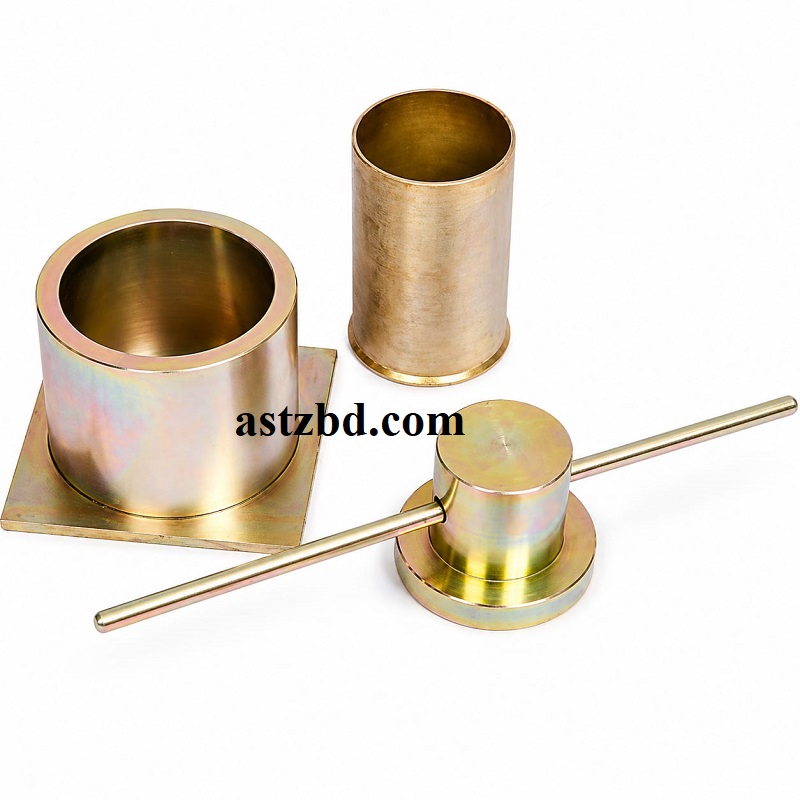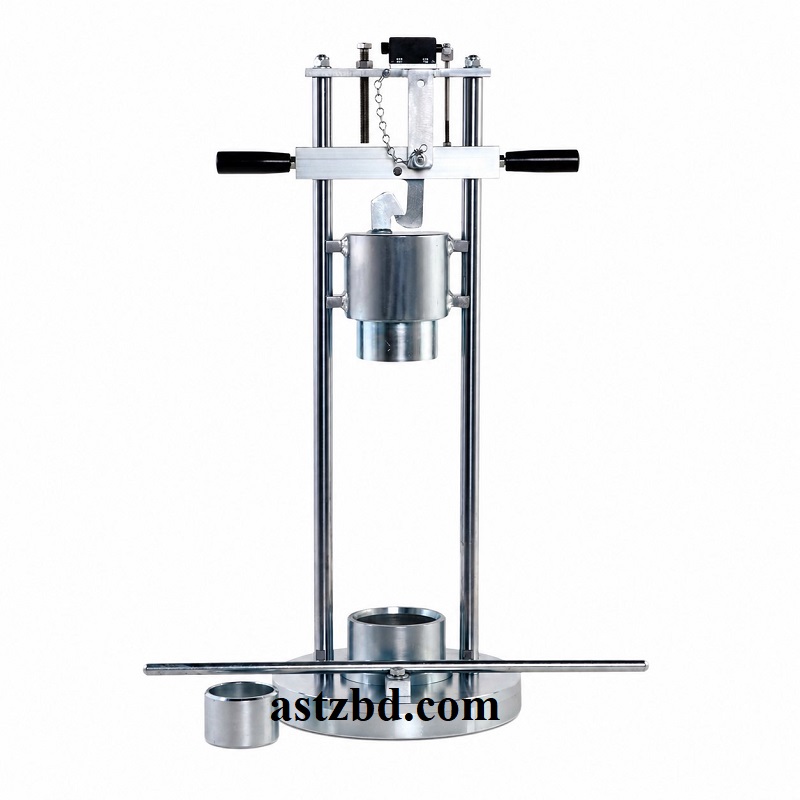
Description Introduction Aggregate Impact Value Testing Machine Roads, bridges, airport runways, and high-rise structures all rely on coarse aggregates that withstand not only gradual compressive loads but also sudden impact forces from heavy traffic, construction machinery, and dynamic loading. Engineers cannot select aggregates based on visual inspection alone — they need a standardised, quantitative measure of impact resistance before aggregates enter any critical structure. The Aggregate Impact Value Testing Machine provides exactly that measure. This AIV test machine simulates the sudden shock that aggregates experience under roller compaction and moving vehicle loads. The machine drops a calibrated 13.5–14.0 kg hammer from a height of 380 mm onto a confined aggregate sample 15 times, then measures the percentage of fines produced. A lower AIV percentage indicates a tougher aggregate with greater resistance to impact, making it suitable for high-load road surfaces and structural concrete. ASTZ Bangladesh supplies this precision testing machine to government laboratories, civil engineering institutions, road contractors, and construction companies throughout Bangladesh. Every machine complies with IS 2386 Part IV:1963 and BS 812-112, ensuring test results meet both national and international quality standards for infrastructure projects. Specifications Aggregate Impact Value Testing Machine Parameter Specification Machine Frame Weight 45–60 kg Base Lower Surface Diameter Minimum 300 mm (30 cm) Hammer (Tup) Weight 13.5–14.0 kg Hammer Lower Face Diameter 100 mm (cylindrical, case-hardened) Hammer Lower Face Length 50 mm (5 cm) Hammer Chamfer 2 mm at lower edge Free-Fall Height 380 ± 5 mm Number of Blows per Test 15 blows, minimum 1-second interval between blows Blow Counter Automatic (built-in), records each blow Steel Cup Internal Diameter 102 mm Steel Cup Depth 50 mm Steel Cup Wall Thickness Minimum 6.3 mm Cylindrical Measure Diameter 75 mm Cylindrical Measure Depth 50 mm Tamping Rod Diameter 16 mm (circular cross-section) Tamping Rod Length 600 mm Aggregate Sample Size Passing 12.5 mm IS sieve, retained on 10 mm IS sieve Post-Test Sieve Size 2.36 mm IS sieve AIV Formula AIV (%) = (B / A) × 100 Weighing Accuracy Required 0.1 g Standard Compliance IS 2386 Part IV:1963, BS 812-112 Floor Support Requirement Level concrete floor, minimum 450 mm thickness Approximate Total Weight 51–60 kg (machine accessories) Complete Specifications Aggregate Impact Value Testing Machine Machine Frame & Base Frame: Rigid steel construction with vertical guide columns for hammer alignment Base Weight: 45–60 kg with flat lower surface of not less than 300 mm diameter Base Mounting: Provision for floor-fixing bolts to prevent movement during impact Floor Requirement: Level concrete floor of minimum 450 mm thickness Finish: Protective corrosion-resistant coating (powder-coated or enamel) Hammer (Metal Tup) Weight: 13.5–14.0 kg Lower Face Shape: Cylindrical, 100 mm diameter, 50 mm long Lower Edge: 2 mm chamfer Surface Treatment: Case-hardened lower face for impact durability Guide Mechanism: Slides freely between vertical columns, concentric with steel cup Release Mechanism: Quick-release trigger for consistent free-fall Free-Fall Height: 380 ± 5 mm above aggregate surface in cup Steel Cup Internal Diameter: 102 mm Depth: 50 mm Wall Thickness: Minimum 6.3 mm Material: High-grade steel, case-hardened interior surface Mounting: Clamps firmly to machine base to prevent oscillation during test Cylindrical Measure Internal Diameter: 75 mm Depth: 50 mm Purpose: Measures the correct aggregate volume for cup loading Tamping Rod Cross-Section: Circular, 16 mm diameter Length: 600 mm End: Rounded at one end for gentle compaction Usage: 25 gentle blows per layer (three layers) for sample preparation Key Features Heavy-duty steel machine frame weighing 45–60 kg with a flat base (minimum 300 mm diameter) for stable, vibration-free test operation Case-hardened metal hammer (tup) weighing 13.5–14.0 kg with a 100 mm diameter cylindrical lower face and 2 mm chamfer for consistent impact delivery Calibrated free-fall height of 380 ± 5 mm achieved through precision vertical guide columns that ensure the hammer falls concentrically with the steel cup Automatic blow counter records every impact blow and prevents manual counting errors during the 15-blow test cycle Quick-release trigger mechanism enables safe, reliable hammer release with consistent free-fall for repeatable results 102 mm internal diameter cylindrical steel cup (50 mm depth, minimum 6.3 mm wall thickness) that the machine securely clamps during impact testing 75 mm diameter cylindrical measure (50 mm depth) for accurate sample-volume preparation before loading the steel cup 16 mm diameter tamping rod (600 mm length) for uniform three-layer sample compaction with 25 gentle blows per layer Corrosion-resistant steel construction with protective coating for long-term durability in demanding laboratory environments Full compliance with IS 2386 Part IV:1963, BS 812-112, and IRC recommended aggregate impact value limits Applications Quality control of coarse aggregates for road surface, base, and sub-base course construction in Bangladesh Coarse aggregate toughness evaluation for structural concrete mix design Bridge deck and approach slab aggregate impact resistance assessment Airport runway and taxiway pavement aggregate quality acceptance testing Pre-qualification of aggregate suppliers for government infrastructure projects (LGED, RHD) Quality assurance at quarry and stone-chip production plants before dispatch High-strength concrete (M65 and above) aggregate suitability verification Railway ballast aggregate toughness assessment for track bed construction Research and development in civil-engineering materials and pavement technology laboratories Teaching and demonstration in BUET, KUET, RUET, CUET, and polytechnic institute laboratories Who Uses This Civil engineers and site quality-control managers on road, bridge, and highway construction projects Government testing laboratories under LGED, RHD, PWD, BRTC, and other public-works agencies in Bangladesh Private material testing and inspection companies providing third-party aggregate certification Quarry operators and stone-chip producers verifying product quality before delivery to contractors Ready-mix concrete plant quality-assurance teams evaluating coarse aggregate toughness University and polytechnic institute civil engineering laboratories – BUET, KUET, RUET, CUET, DUET International contractors and joint ventures executing Bangladesh infrastructure development projects Construction and infrastructure companies maintaining in-house aggregate testing laboratories Research institutions studying pavement durability, aggregate behaviour, and sustainable materials Pavement consultants specifying aggregate quality for highway design and rehabilitation projects Frequently Asked Questions (FAQ) Q: What does the Aggregate Impact Value Testing Machine measure? A: The Aggregate Impact Value Testing Machine measures the resistance of coarse aggregates to sudden shock and impact loading. It delivers 15 standardised hammer blows from a height of 380 mm onto a confined aggregate sample and calculates the percentage of fines produced relative to the original sample weight. Q: Which standards does this machine comply with? A: The Aggregate Impact Value Testing Machine complies with IS 2386 Part IV:1963 (widely adopted across Bangladesh for civil engineering aggregate testing) and BS 812-112 (British Standard). These standards define the hammer weight, free-fall height, cup dimensions, number of blows, and calculation method. Q: What coarse aggregate size does the AIV test require? A: The standard AIV test uses aggregates passing a 12.5 mm IS sieve and retained on a 10 mm IS sieve. The test sample dries at 100–110°C for four hours, cools to room temperature, and then loads into the steel cup in a single tamped layer of 25 strokes. Q: Does the machine include an automatic blow counter? A: Yes. The machine includes a built-in automatic blow counter that records each hammer blow delivered to the aggregate sample. This counter eliminates manual counting errors and ensures the test always delivers exactly 15 blows with the minimum 1-second interval required by IS 2386 Part IV and BS 812-112. Q: What accessories does the complete AIV machine set include? A: The complete set includes the impact machine frame with vertical guide columns and quick-release trigger, the automatic blow counter, the 13.5–14.0 kg case-hardened hammer (tup), one 102 mm diameter steel cup (50 mm depth), one 75 mm diameter cylindrical measure (50 mm depth), and one 16 mm diameter tamping rod (600 mm length). Why Buy from ASTZ Bangladesh ASTZ Bangladesh supplies genuine, standards-compliant AIV testing machines with verified dimensional accuracy and calibration documentation Our technical team provides pre-purchase consultation to match the correct machine specification to your test standard and project requirement We deliver across all divisions of Bangladesh — Dhaka, Chittagong, Rajshahi, Sylhet, Khulna, Barishal, Mymensingh, and Rangpur ASTZ offers transparent, competitive pricing with formal invoicing suitable for government and institutional purchase orders Our after-sales team assists with installation, levelling guidance, and correct test procedure verification We stock replacement parts — including hammers, steel cups, and tamping rods — so your laboratory avoids costly downtime ASTZ Bangladesh has an established reputation serving government labs, universities, road contractors, and private construction companies nationwide Every machine ships with manufacturer quality documentation confirming dimensional compliance with IS 2386 Part IV and BS 812-112 We accept flexible payment options that suit both institutional purchase orders and individual laboratory procurement Our Bengali- and English-speaking support team ensures clear, responsive communication from inquiry to delivery